Blog
In today’s fast-paced world, mental health challenges like stress, anxiety, and depression are becoming more common than ever. According to the National Institute of Mental Health, nearly 1 in 5 adults in the U.S. experiences mental illness each year. While professional help is essential, there are simple daily habits that can support emotional well-being. And one of the most powerful yet overlooked tools is reading books.
Reading isn’t just entertainment. It’s a workout for your brain, a calming ritual for your mind, and a way to escape the pressures of everyday life. Studies show that spending just 6–10 minutes a day reading can reduce stress levels by up to 60%, lower your heart rate, and improve your overall mood.
In this guide, we will tell you:
- How reading affects your brain and emotions
- The specific mental health benefits of reading regularly
- The best types of books to boost mood, focus, and emotional balance
- Simple ways to build a reading habit that fits into your life
Whether you’re a lifelong book lover or someone struggling to find calm in daily chaos. This article will help you understand how books can become a natural therapy for your mind. By the end, you’ll not only feel inspired to pick up your next read but also know exactly which books can support your mental health journey.
What Happens in Your Brain When You Read
Reading is not just a fun hobby. It is a mental exercise that affects your brain in many positive ways. Every time you open a book, your brain works hard which helps you in reducing stress and improving emotional health. Here are the main ways reading impacts your mind.
Reading Activates Multiple Brain Areas
When you read, several parts of your brain work together. Your memory helps you remember characters and storylines. Your imagination visualizes scenes and pictures in your mind. Your emotional centers process feelings of happiness, sadness, or excitement from the story. This brain activity is like doing a workout for your mind and helps keep your brain strong and healthy.
Reading Reduces Stress Hormones
Stress hormones like cortisol are released when you feel anxious or overwhelmed. Reading slowly and focusing on a story helps your body calm down. Studies show that reading can lower stress levels more effectively than listening to music or going for a short walk. Reading gives your brain a chance to relax and reset.
Books vs Social Media for Mental Health
Scrolling social media may seem relaxing, but it often increases stress and anxiety. Fast-moving content and notifications keep your brain alert in a way that is tiring over time. Reading a book gives your mind a break. It improves attention span, lets you focus deeply, and helps your emotions settle. Choosing books over screens can make a big difference in mental well-being.
7 Powerful Mental Health Benefits of Reading
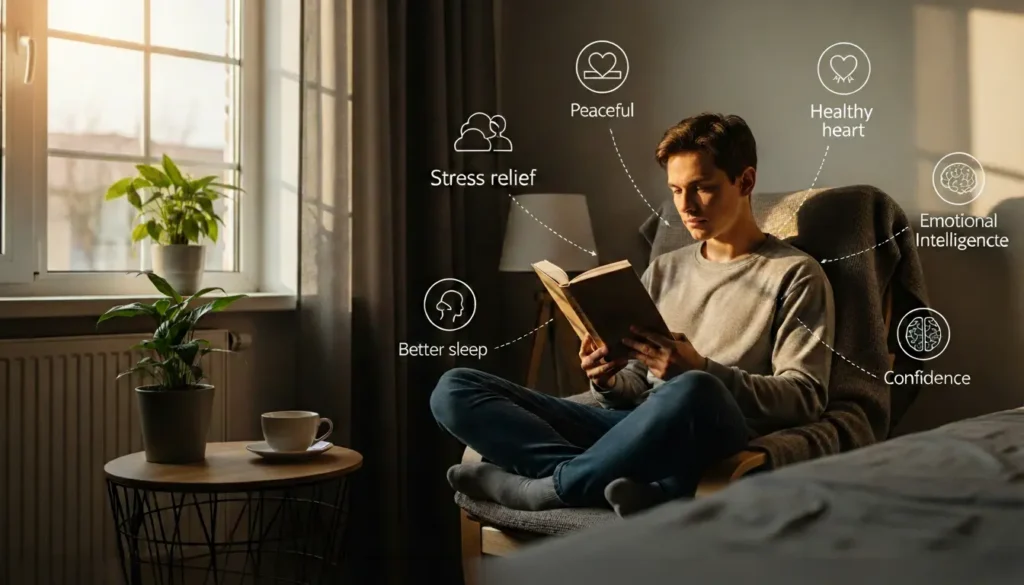
Reading regularly is more than a hobby. It can be a natural way to improve your mood, reduce stress, and strengthen your mind. Here are seven ways reading can support mental health.
Reading Reduces Stress and Anxiety
Even a short reading session can calm your mind. Reading a few pages in a day can lower stress levels. Fiction books and stories with relatable characters help your mind relax and provide a healthy escape from daily worries.
Reading Helps with Depression Symptoms
Books can provide comfort during difficult times. Reading about characters overcoming challenges can make you feel less alone. Stories also offer hope and perspective, which can support emotional recovery and reduce feelings of sadness or isolation
Reading Improves Sleep Quality
Reading before bed helps signal to your brain that it is time to relax. Unlike screens, books do not emit blue light, which can interfere with sleep. A calm reading routine at night can improve sleep quality and make you wake up feeling refreshed.
Reading Increases Emotional Intelligence
By following characters’ thoughts and feelings, readers learn to understand emotions better. This boosts empathy, helping you connect with others and respond to emotions in real life. Emotional intelligence is key to mental health and building strong relationships.
Reading Strengthens Focus and Attention
Deep reading requires concentration, which trains your brain to focus. In a world full of distractions, reading helps improve attention span and the ability to stay present in other areas of life.
Reading Boosts Self-Confidence
Learning new ideas, facts, or skills from books can increase your confidence. Self-help books, personal stories, and educational content helps you deal with challenges and make better decisions.
Reading Supports Long-Term Brain Health
Reading is like a workout for your brain. It strengthens neural connections, improving memory and cognitive function over time. Research shows that regular reading can reduce the risk of cognitive decline and dementia in older adults.
Best Types of Books for Mental Health
Not all books impact your mental health in the same way. Different types of books provide different benefits for stress, anxiety, focus, and emotional balance. Here are the best categories to consider.
Fiction for Emotional Healing
Fiction books allow you to step into someone else’s life, understand their struggles, and feel their victories. This emotional engagement can reduce stress and give a sense of relief.
- Romance and feel-good novels like The Sinne A Dark College Romance lift your mood and provide comfort.
- Literary fiction explores complex emotions, helping you understand your own feelings better.
Picking a fiction book for just 15–20 minutes a day can make a noticeable difference in your mental state.

Self-Help Books for Anxiety and Confidence
Self-help books provide practical tools for managing negative thoughts. They guide you with strategies like mindfulness, journaling, or positive thinking exercises.
- Start with beginner-friendly titles that focus on small daily habits such as The 7 Habits of Highly Effective People by Stephen R. Covey
- Look for books with exercises or actionable tips you can apply immediately such as A Workbook to Open Your Mind Using José Silva’s Method.
Memoirs That Make You Feel Understood
Reading real-life stories of people overcoming challenges can be deeply comforting and inspiring. Memoirs show you that others have faced struggles similar to yours and came out stronger.
- Personal stories create emotional connections.
- They normalize feelings of sadness, fear, or uncertainty.
Poetry for Emotional Release
Poetry is a quick way to process emotions and release stress. Short poems can be read in a few minutes but leave a lasting impact.
• It helps express feelings you might not put into words.
• It can be combined with journaling for deeper reflection.
How to Choose the Right Book for You
• Pick a book that matches your current mood or challenge.
• Mix fiction, self-help, memoirs, and poetry for variety.
• Explore curated collections from BookWharf to find top-rated titles for mental health
How to Start a Reading Habit for Better Mental Health
Knowing that reading improves mental health is helpful. But the real change happens when you turn reading into a daily habit. The good news is that you do not need hours each day. Small steps work best.
Start Small With 10 Minutes a Day
Do not set a big goal like reading one book per week. That can feel difficult.
Start with only 10 minutes a day. That is enough time to calm your mind and build consistency. You can read:
- After waking up
- During lunch break
- Before going to bed
Small sessions create momentum. Once reading becomes part of your routine, you will naturally want to read more.
Create a Calm Reading Space
Your environment matters alot. Choose a quiet and comfortable place where you can focus.
- Sit in a cozy chair
- Keep your phone away
- Use soft lighting in the evening
This signals to your brain that it is time to slow down. Over time, your mind will connect this space with relaxation and peace.
Replace 20 Minutes of Scrolling With Reading
Many people spend 1 to 3 hours per day on social media. Replacing just 20 minutes of scrolling with reading can improve mood and reduce anxiety. Scrolling often increases comparison and stress. Reading builds focus and emotional balance. The difference may feel small at first, but it adds up quickly.
Keep a Simple Reading List
Choosing what to read should not feel stressful. Make a short list of 3 to 5 books you want to explore.
You can:
- Pick one fiction book for relaxation
- Pick one self-help book for growth
- Pick one memoir for inspiration
Collections such as health and wellness books on BookWharf, can make this step easier and save time.
Track Your Progress
Tracking your reading helps you stay motivated. You can:
- Mark pages with a bookmark
- Use a reading journal
- Set a small monthly goal
Seeing your progress builds confidence and reinforces the habit.

Reading vs. Therapy: Can Books Replace Professional Help?
Reading can strongly support mental health. It can reduce stress, improve mood, and help you feel less alone. But it is important to understand one thing clearly:
Books are support tools. They are not a replacement for professional therapy.
How Reading Supports Mental Health
Books can:
- Teach coping strategies
- Help you understand your emotions
- Offer comfort during hard times
- Provide practical tools for daily stress
Many people use reading as a form of self-care. It can feel calming and empowering. Self-help books may guide you through exercises like breathing techniques, journaling, or mindset shifts. Fiction can give your brain a break from real-life pressure.
For mild stress or everyday anxiety, reading can make a real difference.
When Professional Help Is Necessary
If you experience any of the following, you should consider speaking with a licensed mental health professional:
- Persistent sadness that lasts for weeks
- Loss of interest in daily activities
- Severe anxiety or panic attacks
- Thoughts of self-harm or hopelessness
- Difficulty functioning at work or school
These are signs that require professional care. A therapist, psychologist, or psychiatrist is trained to provide structured treatment and medical support when needed.
Reading can complement therapy, but it should not replace it.
Using Books Alongside Therapy
Many therapists recommend books as part of treatment. This is often called guided reading or self-help support.
For example:
- A therapist may suggest a cognitive behavioral therapy book such as The Art of Thinking Clearly by Rolf Dobelli.
- A counselor may recommend a memoir that relates to your experience.
- A mental health professional may suggest mindfulness books to practice between sessions.
In this way, books become a powerful partner in your healing journey.
If You Are in Crisis
If you are in the United States and experiencing a mental health crisis, you can call or text 988, the Suicide and Crisis Lifeline, for immediate support. Help is available 24 hours a day.
If you are outside the U.S., contact your local emergency services or a trusted health provider right away.
Seeking help is a sign of strength, not weakness.
Reading is a powerful tool for emotional well-being. It can calm your mind, expand your perspective, and build resilience. But mental health care works best when you use the right support at the right time.
Books can guide you. Professionals can treat you. Together, they can help you move forward.

Recommended Books to Improve Mental Health
Choosing the right book can make a real difference in your emotional well-being. Below are trusted titles that focus on anxiety, boundaries, mental strength, emotional clarity, and overall brain health.
These books are popular in the United States and widely recommended by mental health professionals and readers.
Best Books for Anxiety and Overthinking
Stop Overthinking by Nick Trenton
This book is practical and easy to understand. It helps readers break the cycle of constant worrying and negative thought patterns.
It teaches:
- How to calm racing thoughts
- How to stop mental spirals
- Simple daily strategies to reduce anxiety
This is a great starting point if you struggle with overthinking.
Best Book for Setting Healthy Boundaries
Set Boundaries, Find Peace by Nedra Glover Tawwab
Many mental health struggles come from poor boundaries in relationships. This book explains how to say no without guilt and protect your emotional energy.
It helps you:
- Communicate clearly
- Reduce resentment
- Build healthier relationships
Strong boundaries improve confidence and reduce stress.
Best Book for Building Mental Strength
13 Things Mentally Strong People Don’t Do by Amy Morin
Written by a licensed psychotherapist, this book focuses on habits that weaken mental strength and how to avoid them.
You will learn:
- How to stop self-pity
- How to manage fear
- How to build emotional resilience
This is ideal for readers who want practical mindset shifts.
Best Book for Clearing Negative Thoughts
Cleaning Up Your Mental Mess by Caroline Leaf
This book explains how toxic thinking affects your brain and how to rewire thought patterns in a healthy way.
It combines science with practical exercises. It is helpful for readers who want a deeper understanding of how thoughts shape emotions.
Best Book for Brain and Energy Health
Mental health is closely connected to physical health. This book explains how food, sleep, and lifestyle impact brain function and emotional balance.
It helps readers:
- Improve energy levels
- Support brain health naturally
- Understand the link between body and mind
This is a strong choice if you want a whole-body approach to mental wellness.
Professional Resource for Therapists and Advanced Readers
The Complete Adult Psychotherapy Treatment Planner, 6th Edition
This is a professional-level resource used by therapists and mental health practitioners. It provides structured treatment plans for various mental health conditions.
While it is more advanced, it is valuable for:
- Psychology students
- Counselors in training
- Professionals seeking structured guidance
How to Choose the Right Book for You
Ask yourself:
- Do I struggle more with anxiety or boundaries?
- Do I need motivation or emotional clarity?
- Do I want science-based guidance or practical steps?
Start with one book that matches your biggest current challenge. Read 10 to 15 minutes daily.
You can explore these mental health titles and more through our collections at BookWharf.com . Where readers can find trusted, high-quality books designed to support emotional well-being.