Master the Fundamentals of AI Decision-Making with This Definitive Guide
About the Book
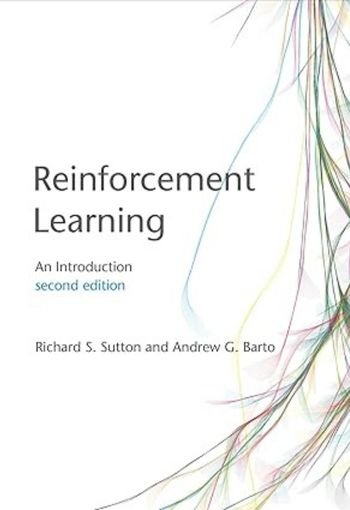
Reinforcement Learning: An Introduction is the definitive textbook on one of the most exciting areas of artificial intelligence. Written by two pioneers in the field, this book explains how agents learn to make decisions through trial and error, optimizing their behavior to achieve specific goals. From robotics and game AI to autonomous vehicles and personalized recommendations, reinforcement learning powers the intelligent systems transforming our world. This edition combines mathematical rigor with intuitive explanations, making complex algorithms accessible without sacrificing depth.
From the Back Cover
“The clearest and most comprehensive introduction to reinforcement learning available. A must-read for anyone serious about understanding how machines learn to make decisions.”
About the Author
Richard S. Sutton is a distinguished research scientist and professor widely recognized as one of the founding fathers of modern reinforcement learning. Andrew G. Barto is a professor emeritus of computer science whose groundbreaking research has shaped decades of AI development. Together, they’ve trained thousands of students and influenced countless researchers through their collaborative work at the intersection of psychology, neuroscience, and machine learning. Their expertise and clear teaching style make this complex subject approachable for learners at every level.
Who Is This Book For?
This book is perfect for computer science students, software engineers, data scientists, and AI researchers who want to build a strong foundation in reinforcement learning. If you’re working on autonomous systems, game AI, robotics, or adaptive control systems, this guide provides the theoretical knowledge and practical insights you need. It’s also ideal for self-taught programmers and ML enthusiasts ready to move beyond supervised learning and explore how agents learn through interaction with their environment.
What You’ll Learn from This Book
Inside these pages, you’ll explore temporal-difference learning, Monte Carlo methods, dynamic programming, and policy gradient techniques that power modern AI systems. The book walks you through essential concepts like value functions, the exploration-exploitation dilemma, and model-based versus model-free approaches. You’ll gain practical understanding of algorithms including Q-learning, SARSA, and actor-critic methods, with clear examples and exercises that reinforce your learning. By the end, you’ll have the knowledge to design, implement, and optimize reinforcement learning solutions for real-world challenges.
Is this book good for beginners?
Yes and no. While the book is incredibly well-written and clearly explained, it does assume some background in calculus, probability, and programming. Complete beginners to computer science might find it challenging, but those with basic coding skills and willingness to learn the math will find it accessible and rewarding.
Do I need to know deep learning to understand this book?
Not at all. The core edition focuses on fundamental RL concepts that work with or without neural networks. Deep reinforcement learning is introduced, but the book builds your understanding from the ground up, starting with simple tabular methods before moving to function approximation.
What programming language is used in the examples?
The book uses pseudocode for algorithms, making the concepts language-agnostic. This means you can implement the methods in Python, Java, C++, or any language you prefer. Many readers supplement their learning with Python implementations available online.
How is this different from online RL courses?
This book provides systematic, comprehensive coverage that online courses often can’t match. Where videos give you surface-level understanding, this textbook dives deep into the mathematical foundations and theoretical principles that make you a true expert. It’s the resource you’ll return to again and again as a reference throughout your career.
Will this book help me get a job in AI?
Absolutely. Reinforcement learning is one of the most in-demand skills in AI and machine learning roles. Understanding the principles in this book demonstrates serious expertise to employers, especially in fields like robotics, autonomous systems, game development, and recommendation systems. It’s considered essential reading for many AI research positions and advanced ML engineering roles.
Ready to transform your understanding of artificial intelligence? Add this essential textbook to your cart and start your reinforcement learning journey today.











Reviews
Clear filtersThere are no reviews yet.