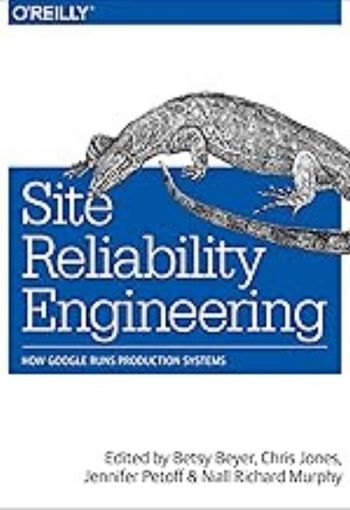
Master Site Reliability Engineering: Google’s Proven Approach to Building Scalable Production Systems
About the Book
Site Reliability Engineering is the essential handbook that reveals how Google approaches the challenge of keeping massive, complex systems running reliably at scale. Written by key members of Google’s SRE team, this book introduces the principles, practices, and cultural philosophies that have made Google’s infrastructure the gold standard in the industry. You’ll learn how to balance the velocity of software development with the stability of production systems, implement effective monitoring and alerting, manage incidents gracefully, and build automation that actually works. This isn’t theoretical advice—it’s battle-tested wisdom from engineers who keep some of the world’s busiest services online. If you’re serious about reliability, scalability, and operational excellence, this book is your roadmap.
About the Author
This book is authored by four distinguished engineers from Google’s Site Reliability Engineering organization: Betsy Beyer, Chris Jones, Jennifer Petoff, and Niall Richard Murphy. Together, they bring decades of hands-on experience managing some of the largest and most complex distributed systems in existence. Their insights come directly from the trenches of production engineering at Google, where downtime is measured in millions of dollars and user trust is paramount. Published by O’Reilly Media, a trusted name in technical publishing, this book represents the collective knowledge of Google’s SRE community and has become the foundational text for the SRE discipline worldwide.
Who Is This Book For?
This book is perfect for DevOps engineers, software engineers, system administrators, and engineering managers who want to improve system reliability and operational efficiency. If you’re responsible for maintaining production systems, dealing with scaling challenges, or bridging the gap between development and operations teams, you’ll find invaluable guidance here. It’s especially useful for organizations transitioning to cloud infrastructure, adopting microservices architectures, or establishing SRE practices for the first time. Whether you work at a startup or an enterprise, the principles in this book will transform how you think about reliability and operations.
Frequently Asked Questions (FAQs)
Q1: What is Site Reliability Engineering and why does it matter?
Site Reliability Engineering (SRE) is a discipline that applies software engineering principles to operations and infrastructure problems. It matters because it helps organizations build systems that are both highly reliable and able to evolve quickly, eliminating the traditional conflict between stability and innovation.
Q2: Do I need Google-scale infrastructure to benefit from SRE practices?
Not at all. While Google’s scale is unique, the SRE principles in this book—like error budgets, SLOs, automation, and blameless postmortems—are valuable for organizations of any size. Many startups and mid-sized companies successfully implement SRE practices to improve reliability.
Q3: How is SRE different from traditional DevOps?
SRE and DevOps share similar goals, but SRE provides a more prescriptive framework with specific practices like error budgets and SLOs. Many consider SRE to be a concrete implementation of DevOps philosophy, with engineering rigor applied to operations work.
Q4: Is this book suitable for beginners in operations and infrastructure?
While the book assumes some technical background, it’s accessible to anyone with basic software engineering or systems administration knowledge. Beginners will find clear explanations of core concepts, while experienced practitioners will appreciate the advanced strategies and real-world case studies.















Reviews
Clear filtersThere are no reviews yet.